Buy ethnic-shop.com ?
We are moving the project
ethnic-shop.com .
Are you interested in purchasing the domain
ethnic-shop.com ?
domain@kv-gmbh.de · 0541-91531010
Buy ethnic-shop.com ?
Why are demonstrative pronouns called demonstrative pronouns?
Demonstrative pronouns are called demonstrative because they demonstrate or point to a specific noun or pronoun in a sentence. They help to indicate the position or location of the noun or pronoun in relation to the speaker or listener. By using demonstrative pronouns such as "this," "that," "these," and "those," speakers can make their communication more precise and clear by specifying which person, place, thing, or idea they are referring to. **
What are demonstrative pronouns and relative pronouns?
Demonstrative pronouns are pronouns that are used to point to specific things or people. Examples of demonstrative pronouns include "this," "that," "these," and "those." Relative pronouns are pronouns that introduce dependent clauses and connect them to independent clauses. Examples of relative pronouns include "who," "whom," "whose," "which," and "that." **


Similar search terms for Pronouns
Top-Angebote
Products related to Pronouns:
-
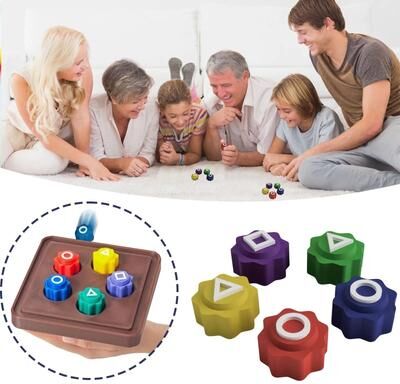
Uplifted Finds Korean Traditional Folk Game Set Family Travel Play Kit eBring generations together with this Korean traditional folk game set featuring classic childhood games enjoyed across Korea. This cultural play kit includes multiple timeless games that encourage movement strategy and family interaction making it...83,97 $*Shipping: 0,00 $Secure redirect to the provider
-
Uplifted Finds Korean Traditional Folk Game Set Family Travel Play Kit dBring generations together with this Korean traditional folk game set featuring classic childhood games enjoyed across Korea. This cultural play kit includes multiple timeless games that encourage movement strategy and family interaction making it...53,97 $*Shipping: 0,00 $Secure redirect to the provider
-
Uplifted Finds Korean Traditional Folk Game Set Family Travel Play Kit bBring generations together with this Korean traditional folk game set featuring classic childhood games enjoyed across Korea. This cultural play kit includes multiple timeless games that encourage movement strategy and family interaction making it...63,97 $*Shipping: 0,00 $Secure redirect to the provider



-
With which pronouns do many people confuse reflexive pronouns?
Many people confuse reflexive pronouns with personal pronouns. For example, they may use "myself" or "yourself" instead of "me" or "you" in a sentence. This confusion often occurs when people are trying to emphasize the subject of the sentence, but they mistakenly use a reflexive pronoun instead of a personal pronoun. It's important to understand the difference between reflexive and personal pronouns in order to use them correctly in sentences. **
-
What are pronouns?
Pronouns are words that are used in place of nouns to avoid repetition in a sentence. They can refer to people, places, things, or ideas. Pronouns help make sentences clearer and more concise by replacing specific nouns with general words like "he," "she," "it," "they," and "we." Using pronouns also helps to maintain the flow of writing and make it more engaging for the reader. **
-
What is a cultural heritage?
Cultural heritage refers to the traditions, customs, beliefs, and artifacts that are passed down from generation to generation within a society. It encompasses the tangible and intangible aspects of a culture, including historical sites, monuments, art, music, language, and rituals. Cultural heritage plays a crucial role in shaping a community's identity and preserving its unique heritage for future generations. It is an important part of a society's history and contributes to its sense of belonging and continuity. **
-
What is the difference between personal pronouns and reflexive pronouns?
Personal pronouns are used to refer to people or things, such as "I," "you," "he," "she," "it," "we," and "they." Reflexive pronouns, on the other hand, are used when the subject and object of a sentence are the same person or thing, such as "myself," "yourself," "himself," "herself," "itself," "ourselves," and "themselves." Reflexive pronouns are used to reflect the action back onto the subject, while personal pronouns simply refer to the subject or object. **


What is the difference between relative pronouns and interrogative pronouns?
Relative pronouns are used to connect a dependent clause to an independent clause, providing more information about a noun in the independent clause. They include words like "who," "which," and "that." Interrogative pronouns, on the other hand, are used to ask questions and gather information. They include words like "who," "what," "which," "whom," and "whose." The main difference between the two is their function in a sentence - relative pronouns connect clauses, while interrogative pronouns are used to ask questions. **
Which pronouns do many people often confuse with reflexive pronouns?
Many people often confuse reflexive pronouns with intensive pronouns. Intensive pronouns are used to emphasize a preceding noun or pronoun, while reflexive pronouns are used when the subject and object of a sentence are the same. For example, "I myself will do it" uses an intensive pronoun, while "I hurt myself" uses a reflexive pronoun. It is important to understand the distinction between these two types of pronouns to use them correctly in sentences. **
Top-Angebote
Products related to Pronouns:
-
World Rug Gallery Traditional Folk Floral Power Loomed Indoor Area RugDetails: Add lasting style to your home with this Ivory Cream Traditional Folk Floral Area Rug. The classic ivory botanical floral design pairs effortlessly with virtually any decor, making it a natural fit for your living room, bedroom, or entryway.147,99 $*Shipping: 0,00 $Secure redirect to the provider
-
Uplifted Finds Korean Traditional Folk Game Set Family Travel Play Kit eBring generations together with this Korean traditional folk game set featuring classic childhood games enjoyed across Korea. This cultural play kit includes multiple timeless games that encourage movement strategy and family interaction making it...83,97 $*Shipping: 0,00 $Secure redirect to the provider
-
Why are demonstrative pronouns called demonstrative pronouns?
Demonstrative pronouns are called demonstrative because they demonstrate or point to a specific noun or pronoun in a sentence. They help to indicate the position or location of the noun or pronoun in relation to the speaker or listener. By using demonstrative pronouns such as "this," "that," "these," and "those," speakers can make their communication more precise and clear by specifying which person, place, thing, or idea they are referring to. **
-
What are demonstrative pronouns and relative pronouns?
Demonstrative pronouns are pronouns that are used to point to specific things or people. Examples of demonstrative pronouns include "this," "that," "these," and "those." Relative pronouns are pronouns that introduce dependent clauses and connect them to independent clauses. Examples of relative pronouns include "who," "whom," "whose," "which," and "that." **
-
With which pronouns do many people confuse reflexive pronouns?
Many people confuse reflexive pronouns with personal pronouns. For example, they may use "myself" or "yourself" instead of "me" or "you" in a sentence. This confusion often occurs when people are trying to emphasize the subject of the sentence, but they mistakenly use a reflexive pronoun instead of a personal pronoun. It's important to understand the difference between reflexive and personal pronouns in order to use them correctly in sentences. **
-
What are pronouns?
Pronouns are words that are used in place of nouns to avoid repetition in a sentence. They can refer to people, places, things, or ideas. Pronouns help make sentences clearer and more concise by replacing specific nouns with general words like "he," "she," "it," "they," and "we." Using pronouns also helps to maintain the flow of writing and make it more engaging for the reader. **
Similar search terms for Pronouns
-
Uplifted Finds Korean Traditional Folk Game Set Family Travel Play Kit dBring generations together with this Korean traditional folk game set featuring classic childhood games enjoyed across Korea. This cultural play kit includes multiple timeless games that encourage movement strategy and family interaction making it...53,97 $*Shipping: 0,00 $Secure redirect to the provider
-
Uplifted Finds Korean Traditional Folk Game Set Family Travel Play Kit bBring generations together with this Korean traditional folk game set featuring classic childhood games enjoyed across Korea. This cultural play kit includes multiple timeless games that encourage movement strategy and family interaction making it...63,97 $*Shipping: 0,00 $Secure redirect to the provider
-
Uplifted Finds Korean Traditional Folk Game Set Family Travel Play Kit aBring generations together with this Korean traditional folk game set featuring classic childhood games enjoyed across Korea. This cultural play kit includes multiple timeless games that encourage movement strategy and family interaction making it...58,97 $*Shipping: 0,00 $Secure redirect to the provider
-
Uplifted Finds Korean Traditional Folk Game Set Family Travel Play Kit cBring generations together with this Korean traditional folk game set featuring classic childhood games enjoyed across Korea. This cultural play kit includes multiple timeless games that encourage movement strategy and family interaction making it...88,97 $*Shipping: 0,00 $Secure redirect to the provider
-
What is a cultural heritage?
Cultural heritage refers to the traditions, customs, beliefs, and artifacts that are passed down from generation to generation within a society. It encompasses the tangible and intangible aspects of a culture, including historical sites, monuments, art, music, language, and rituals. Cultural heritage plays a crucial role in shaping a community's identity and preserving its unique heritage for future generations. It is an important part of a society's history and contributes to its sense of belonging and continuity. **
-
What is the difference between personal pronouns and reflexive pronouns?
Personal pronouns are used to refer to people or things, such as "I," "you," "he," "she," "it," "we," and "they." Reflexive pronouns, on the other hand, are used when the subject and object of a sentence are the same person or thing, such as "myself," "yourself," "himself," "herself," "itself," "ourselves," and "themselves." Reflexive pronouns are used to reflect the action back onto the subject, while personal pronouns simply refer to the subject or object. **
-
What is the difference between relative pronouns and interrogative pronouns?
Relative pronouns are used to connect a dependent clause to an independent clause, providing more information about a noun in the independent clause. They include words like "who," "which," and "that." Interrogative pronouns, on the other hand, are used to ask questions and gather information. They include words like "who," "what," "which," "whom," and "whose." The main difference between the two is their function in a sentence - relative pronouns connect clauses, while interrogative pronouns are used to ask questions. **
-
Which pronouns do many people often confuse with reflexive pronouns?
Many people often confuse reflexive pronouns with intensive pronouns. Intensive pronouns are used to emphasize a preceding noun or pronoun, while reflexive pronouns are used when the subject and object of a sentence are the same. For example, "I myself will do it" uses an intensive pronoun, while "I hurt myself" uses a reflexive pronoun. It is important to understand the distinction between these two types of pronouns to use them correctly in sentences. **
* All prices are inclusive of VAT and, if applicable, plus shipping costs. The offer information is based on the details provided by the respective shop and is updated through automated processes. Real-time updates do not occur, so deviations can occur in individual cases. ** Note: Parts of this content were created by AI.