Buy ethnic-shop.com ?
We are moving the project
ethnic-shop.com .
Are you interested in purchasing the domain
ethnic-shop.com ?
domain@kv-gmbh.de · 0541-91531010
Buy ethnic-shop.com ?
Is "hin und her" a tautology stylistic device?
No, "hin und her" is not a tautology stylistic device. A tautology is a rhetorical device where the same idea is repeated in different words, while "hin und her" is a German expression that means "back and forth" or "to and fro." It is used to emphasize movement or indecision in a more vivid and expressive way. **
What is the difference between tautology and synonymy?
Tautology refers to a statement that is always true, regardless of the truth values of its components. In contrast, synonymy refers to words or phrases that have the same or very similar meanings. While tautology deals with the logical structure of statements, synonymy focuses on the semantic relationships between words or expressions. In essence, tautology is a concept within logic, while synonymy is a concept within linguistics. **


Similar search terms for Tautology
Top-Angebote
Products related to Tautology:
-
World Rug Gallery Traditional Folk Floral Power Loomed Indoor Area RugDetails: Add lasting style to your home with this Ivory Cream Traditional Folk Floral Area Rug. The classic ivory botanical floral design pairs effortlessly with virtually any decor, making it a natural fit for your living room, bedroom, or entryway.57,49 $*Shipping: 0,00 $Secure redirect to the provider
-
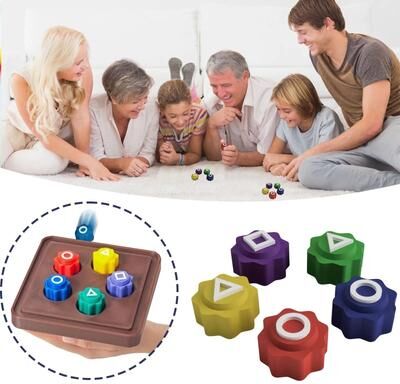
Uplifted Finds Korean Traditional Folk Game Set Family Travel Play Kit dBring generations together with this Korean traditional folk game set featuring classic childhood games enjoyed across Korea. This cultural play kit includes multiple timeless games that encourage movement strategy and family interaction making it...53,97 $*Shipping: 0,00 $Secure redirect to the provider
-
World Rug Gallery Traditional Folk Floral Power Loomed Indoor Area RugDetails: Add lasting style to your home with this Ivory Cream Traditional Folk Floral Area Rug. The classic ivory botanical floral design pairs effortlessly with virtually any decor, making it a natural fit for your living room, bedroom, or entryway.58,49 $*Shipping: 0,00 $Secure redirect to the provider
-
Uplifted Finds Korean Traditional Folk Game Set Family Travel Play Kit eBring generations together with this Korean traditional folk game set featuring classic childhood games enjoyed across Korea. This cultural play kit includes multiple timeless games that encourage movement strategy and family interaction making it...83,97 $*Shipping: 0,00 $Secure redirect to the provider


-
What is the difference between tautology and pleonasm?
Tautology refers to the use of different words that mean the same thing in a repetitive or redundant manner, such as "free gift" or "end result." Pleonasm, on the other hand, involves the use of unnecessary or redundant words or phrases that do not add any additional meaning to the sentence, such as "I saw it with my own eyes" or "I personally believe." While tautology involves repeating the same idea using different words, pleonasm involves using unnecessary words or phrases that do not contribute to the meaning of the sentence. **
-
Is "hin und her" a tautology figure of speech?
Yes, "hin und her" is a tautology figure of speech. Tautology is the repetition of the same idea in different words, and "hin und her" is a German expression that means "back and forth" or "to and fro." The repetition of "hin" and "her" serves to emphasize the back-and-forth motion, making it a tautological figure of speech. **
-
What is the difference between pleonasm, tautology, and hendiadys?
Pleonasm is the use of more words than necessary to convey meaning, often resulting in redundancy. Tautology is a specific type of pleonasm where the same idea is repeated in different words. Hendiadys, on the other hand, is a figure of speech where two words connected by "and" are used to express a single idea. In summary, pleonasm involves unnecessary repetition, tautology is a specific form of pleonasm, and hendiadys is a different rhetorical device altogether. **
-
What is the difference between a tautology and a hendiadys?
A tautology is a statement that is always true, regardless of the truth values of its components. For example, "It is what it is" is a tautology because it is redundant and always true. On the other hand, a hendiadys is a figure of speech in which a single idea is expressed through two words connected by "and," emphasizing the idea by using two words instead of one. For example, "nice and warm" is a hendiadys because it emphasizes the warmth by using two words instead of one. In summary, a tautology is a redundant statement that is always true, while a hendiadys is a figure of speech that emphasizes an idea by using two words instead of one. **


What is a cultural heritage?
Cultural heritage refers to the traditions, customs, beliefs, and artifacts that are passed down from generation to generation within a society. It encompasses the tangible and intangible aspects of a culture, including historical sites, monuments, art, music, language, and rituals. Cultural heritage plays a crucial role in shaping a community's identity and preserving its unique heritage for future generations. It is an important part of a society's history and contributes to its sense of belonging and continuity. **
How can I recognize that the following task is a tautology?
A tautology is a statement that is always true, regardless of the truth values of its components. One way to recognize a tautology is to construct a truth table for the statement and see if the result is always true. Another way is to use logical equivalences to simplify the statement and see if it reduces to a known tautology, such as "p OR NOT p." Additionally, if the statement is in the form of "p implies q" and q is always true, then the statement is a tautology. **
Top-Angebote
Products related to Tautology:
-
Paco Home Ethnic Design Rug in Cream with Traditional colorful PatternsThis cosy and rustic rug is decorated with superb ethnic patterns, faded colors and abstract designs, making it the perfect choice for conjuring up a excitingly colorful yet inviting ambience in your home.39,99 $*Shipping: 0,00 $Secure redirect to the provider
-
World Rug Gallery Traditional Folk Floral Power Loomed Indoor Area RugDetails: Add lasting style to your home with this Ivory Cream Traditional Folk Floral Area Rug. The classic ivory botanical floral design pairs effortlessly with virtually any decor, making it a natural fit for your living room, bedroom, or entryway.57,49 $*Shipping: 0,00 $Secure redirect to the provider
-
Uplifted Finds Korean Traditional Folk Game Set Family Travel Play Kit dBring generations together with this Korean traditional folk game set featuring classic childhood games enjoyed across Korea. This cultural play kit includes multiple timeless games that encourage movement strategy and family interaction making it...53,97 $*Shipping: 0,00 $Secure redirect to the provider
-
Is "hin und her" a tautology stylistic device?
No, "hin und her" is not a tautology stylistic device. A tautology is a rhetorical device where the same idea is repeated in different words, while "hin und her" is a German expression that means "back and forth" or "to and fro." It is used to emphasize movement or indecision in a more vivid and expressive way. **
-
What is the difference between tautology and synonymy?
Tautology refers to a statement that is always true, regardless of the truth values of its components. In contrast, synonymy refers to words or phrases that have the same or very similar meanings. While tautology deals with the logical structure of statements, synonymy focuses on the semantic relationships between words or expressions. In essence, tautology is a concept within logic, while synonymy is a concept within linguistics. **
-
What is the difference between tautology and pleonasm?
Tautology refers to the use of different words that mean the same thing in a repetitive or redundant manner, such as "free gift" or "end result." Pleonasm, on the other hand, involves the use of unnecessary or redundant words or phrases that do not add any additional meaning to the sentence, such as "I saw it with my own eyes" or "I personally believe." While tautology involves repeating the same idea using different words, pleonasm involves using unnecessary words or phrases that do not contribute to the meaning of the sentence. **
-
Is "hin und her" a tautology figure of speech?
Yes, "hin und her" is a tautology figure of speech. Tautology is the repetition of the same idea in different words, and "hin und her" is a German expression that means "back and forth" or "to and fro." The repetition of "hin" and "her" serves to emphasize the back-and-forth motion, making it a tautological figure of speech. **
Similar search terms for Tautology
-
World Rug Gallery Traditional Folk Floral Power Loomed Indoor Area RugDetails: Add lasting style to your home with this Ivory Cream Traditional Folk Floral Area Rug. The classic ivory botanical floral design pairs effortlessly with virtually any decor, making it a natural fit for your living room, bedroom, or entryway.58,49 $*Shipping: 0,00 $Secure redirect to the provider
-
Uplifted Finds Korean Traditional Folk Game Set Family Travel Play Kit eBring generations together with this Korean traditional folk game set featuring classic childhood games enjoyed across Korea. This cultural play kit includes multiple timeless games that encourage movement strategy and family interaction making it...83,97 $*Shipping: 0,00 $Secure redirect to the provider
-
Uplifted Finds Korean Traditional Folk Game Set Family Travel Play Kit bBring generations together with this Korean traditional folk game set featuring classic childhood games enjoyed across Korea. This cultural play kit includes multiple timeless games that encourage movement strategy and family interaction making it...63,97 $*Shipping: 0,00 $Secure redirect to the provider
-
Uplifted Finds Korean Traditional Folk Game Set Family Travel Play Kit aBring generations together with this Korean traditional folk game set featuring classic childhood games enjoyed across Korea. This cultural play kit includes multiple timeless games that encourage movement strategy and family interaction making it...58,97 $*Shipping: 0,00 $Secure redirect to the provider
-
What is the difference between pleonasm, tautology, and hendiadys?
Pleonasm is the use of more words than necessary to convey meaning, often resulting in redundancy. Tautology is a specific type of pleonasm where the same idea is repeated in different words. Hendiadys, on the other hand, is a figure of speech where two words connected by "and" are used to express a single idea. In summary, pleonasm involves unnecessary repetition, tautology is a specific form of pleonasm, and hendiadys is a different rhetorical device altogether. **
-
What is the difference between a tautology and a hendiadys?
A tautology is a statement that is always true, regardless of the truth values of its components. For example, "It is what it is" is a tautology because it is redundant and always true. On the other hand, a hendiadys is a figure of speech in which a single idea is expressed through two words connected by "and," emphasizing the idea by using two words instead of one. For example, "nice and warm" is a hendiadys because it emphasizes the warmth by using two words instead of one. In summary, a tautology is a redundant statement that is always true, while a hendiadys is a figure of speech that emphasizes an idea by using two words instead of one. **
-
What is a cultural heritage?
Cultural heritage refers to the traditions, customs, beliefs, and artifacts that are passed down from generation to generation within a society. It encompasses the tangible and intangible aspects of a culture, including historical sites, monuments, art, music, language, and rituals. Cultural heritage plays a crucial role in shaping a community's identity and preserving its unique heritage for future generations. It is an important part of a society's history and contributes to its sense of belonging and continuity. **
-
How can I recognize that the following task is a tautology?
A tautology is a statement that is always true, regardless of the truth values of its components. One way to recognize a tautology is to construct a truth table for the statement and see if the result is always true. Another way is to use logical equivalences to simplify the statement and see if it reduces to a known tautology, such as "p OR NOT p." Additionally, if the statement is in the form of "p implies q" and q is always true, then the statement is a tautology. **
* All prices are inclusive of VAT and, if applicable, plus shipping costs. The offer information is based on the details provided by the respective shop and is updated through automated processes. Real-time updates do not occur, so deviations can occur in individual cases. ** Note: Parts of this content were created by AI.