Buy ethnic-shop.com ?
We are moving the project
ethnic-shop.com .
Are you interested in purchasing the domain
ethnic-shop.com ?
domain@kv-gmbh.de · 0541-91531010
Buy ethnic-shop.com ?
What is the correct solution for the task on left inverse, right inverse, and inverse mapping?
The correct solution for the task on left inverse, right inverse, and inverse mapping is as follows: 1. Left Inverse: A left inverse of a function f is a function g such that g(f(x)) = x for all x in the domain of f. To find the left inverse, we need to solve for g in the equation g(f(x)) = x. 2. Right Inverse: A right inverse of a function f is a function h such that f(h(x)) = x for all x in the domain of h. To find the right inverse, we need to solve for h in the equation f(h(x)) = x. 3. Inverse Mapping: The inverse mapping of a function f is a function f^-1 such that f(f^-1(x)) = x for all x in the domain of f and f^-1(f(x)) = x for all x in the domain of f^-1. To find the inverse mapping, we need to solve for **
What are inverse functions?
Inverse functions are functions that "reverse" the action of another function. In other words, if a function f(x) maps an input x to an output y, then the inverse function, denoted as f^(-1)(y), maps the output y back to the original input x. Inverse functions undo the effects of the original function, allowing us to retrieve the original input from the output. It is important to note that not all functions have inverses, and for a function to have an inverse, it must be one-to-one (each input corresponds to a unique output). **


Similar search terms for Inverse
Top-Angebote
Products related to Inverse:
-
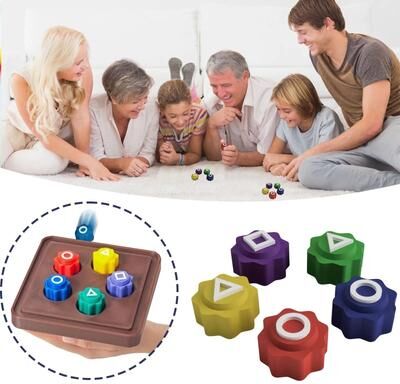
Uplifted Finds Korean Traditional Folk Game Set Family Travel Play Kit aBring generations together with this Korean traditional folk game set featuring classic childhood games enjoyed across Korea. This cultural play kit includes multiple timeless games that encourage movement strategy and family interaction making it...58,97 $*Shipping: 0,00 $Secure redirect to the provider
-
Uplifted Finds Korean Traditional Folk Game Set Family Travel Play Kit dBring generations together with this Korean traditional folk game set featuring classic childhood games enjoyed across Korea. This cultural play kit includes multiple timeless games that encourage movement strategy and family interaction making it...53,97 $*Shipping: 0,00 $Secure redirect to the provider


-
What are inverse values?
Inverse values are pairs of numbers that, when multiplied together, equal 1. For example, the inverse of 2 is 1/2, as 2 * 1/2 = 1. Inverse values are important in mathematics, especially in operations like division, where multiplying by the inverse is equivalent to dividing. Inverse values are also used in trigonometry, where the reciprocal of a trigonometric function is its inverse. **
-
What is the difference between the inverse function and the inverse function?
The inverse function and the inverse of a function are related concepts but have different meanings. The inverse function of a function f is denoted as f^(-1) and it undoes the action of the original function f. It swaps the input and output values of the original function. On the other hand, the inverse of a function is the reflection of the function's graph over the line y = x. It is obtained by swapping the x and y variables in the function's equation. **
-
What is a cultural heritage?
Cultural heritage refers to the traditions, customs, beliefs, and artifacts that are passed down from generation to generation within a society. It encompasses the tangible and intangible aspects of a culture, including historical sites, monuments, art, music, language, and rituals. Cultural heritage plays a crucial role in shaping a community's identity and preserving its unique heritage for future generations. It is an important part of a society's history and contributes to its sense of belonging and continuity. **
-
What is the inverse probability?
Inverse probability is the probability of an event not happening. It is calculated by subtracting the probability of the event from 1. For example, if the probability of raining tomorrow is 0.3, then the inverse probability of raining tomorrow is 0.7 (1 - 0.3). Inverse probability is useful in calculating the likelihood of the complementary event occurring. **

What is a multiplicative inverse?
A multiplicative inverse is a number that, when multiplied by a given number, results in the multiplicative identity, which is usually 1. In other words, the multiplicative inverse of a number is the reciprocal of that number. For example, the multiplicative inverse of 2 is 1/2, because 2 multiplied by 1/2 equals 1. **
What does "left-inverse" mean?
A left-inverse of a function is another function that, when composed with the original function from the left, results in the identity function. In other words, if we have a function f and a function g such that g(f(x)) = x for all x in the domain of f, then g is the left-inverse of f. This means that g "undoes" the action of f when applied from the left. **
Top-Angebote
Products related to Inverse:
-
Uplifted Finds Korean Traditional Folk Game Set Family Travel Play Kit bBring generations together with this Korean traditional folk game set featuring classic childhood games enjoyed across Korea. This cultural play kit includes multiple timeless games that encourage movement strategy and family interaction making it...63,97 $*Shipping: 0,00 $Secure redirect to the provider
-
What is the correct solution for the task on left inverse, right inverse, and inverse mapping?
The correct solution for the task on left inverse, right inverse, and inverse mapping is as follows: 1. Left Inverse: A left inverse of a function f is a function g such that g(f(x)) = x for all x in the domain of f. To find the left inverse, we need to solve for g in the equation g(f(x)) = x. 2. Right Inverse: A right inverse of a function f is a function h such that f(h(x)) = x for all x in the domain of h. To find the right inverse, we need to solve for h in the equation f(h(x)) = x. 3. Inverse Mapping: The inverse mapping of a function f is a function f^-1 such that f(f^-1(x)) = x for all x in the domain of f and f^-1(f(x)) = x for all x in the domain of f^-1. To find the inverse mapping, we need to solve for **
-
What are inverse functions?
Inverse functions are functions that "reverse" the action of another function. In other words, if a function f(x) maps an input x to an output y, then the inverse function, denoted as f^(-1)(y), maps the output y back to the original input x. Inverse functions undo the effects of the original function, allowing us to retrieve the original input from the output. It is important to note that not all functions have inverses, and for a function to have an inverse, it must be one-to-one (each input corresponds to a unique output). **
-
What are inverse values?
Inverse values are pairs of numbers that, when multiplied together, equal 1. For example, the inverse of 2 is 1/2, as 2 * 1/2 = 1. Inverse values are important in mathematics, especially in operations like division, where multiplying by the inverse is equivalent to dividing. Inverse values are also used in trigonometry, where the reciprocal of a trigonometric function is its inverse. **
-
What is the difference between the inverse function and the inverse function?
The inverse function and the inverse of a function are related concepts but have different meanings. The inverse function of a function f is denoted as f^(-1) and it undoes the action of the original function f. It swaps the input and output values of the original function. On the other hand, the inverse of a function is the reflection of the function's graph over the line y = x. It is obtained by swapping the x and y variables in the function's equation. **
Similar search terms for Inverse
-
Uplifted Finds Korean Traditional Folk Game Set Family Travel Play Kit aBring generations together with this Korean traditional folk game set featuring classic childhood games enjoyed across Korea. This cultural play kit includes multiple timeless games that encourage movement strategy and family interaction making it...58,97 $*Shipping: 0,00 $Secure redirect to the provider
-
Uplifted Finds Korean Traditional Folk Game Set Family Travel Play Kit dBring generations together with this Korean traditional folk game set featuring classic childhood games enjoyed across Korea. This cultural play kit includes multiple timeless games that encourage movement strategy and family interaction making it...53,97 $*Shipping: 0,00 $Secure redirect to the provider
-
Uplifted Finds Korean Traditional Folk Game Set Family Travel Play Kit eBring generations together with this Korean traditional folk game set featuring classic childhood games enjoyed across Korea. This cultural play kit includes multiple timeless games that encourage movement strategy and family interaction making it...83,97 $*Shipping: 0,00 $Secure redirect to the provider
-
Uplifted Finds Korean Traditional Folk Game Set Family Travel Play Kit cBring generations together with this Korean traditional folk game set featuring classic childhood games enjoyed across Korea. This cultural play kit includes multiple timeless games that encourage movement strategy and family interaction making it...88,97 $*Shipping: 0,00 $Secure redirect to the provider
-
What is a cultural heritage?
Cultural heritage refers to the traditions, customs, beliefs, and artifacts that are passed down from generation to generation within a society. It encompasses the tangible and intangible aspects of a culture, including historical sites, monuments, art, music, language, and rituals. Cultural heritage plays a crucial role in shaping a community's identity and preserving its unique heritage for future generations. It is an important part of a society's history and contributes to its sense of belonging and continuity. **
-
What is the inverse probability?
Inverse probability is the probability of an event not happening. It is calculated by subtracting the probability of the event from 1. For example, if the probability of raining tomorrow is 0.3, then the inverse probability of raining tomorrow is 0.7 (1 - 0.3). Inverse probability is useful in calculating the likelihood of the complementary event occurring. **
-
What is a multiplicative inverse?
A multiplicative inverse is a number that, when multiplied by a given number, results in the multiplicative identity, which is usually 1. In other words, the multiplicative inverse of a number is the reciprocal of that number. For example, the multiplicative inverse of 2 is 1/2, because 2 multiplied by 1/2 equals 1. **
-
What does "left-inverse" mean?
A left-inverse of a function is another function that, when composed with the original function from the left, results in the identity function. In other words, if we have a function f and a function g such that g(f(x)) = x for all x in the domain of f, then g is the left-inverse of f. This means that g "undoes" the action of f when applied from the left. **
* All prices are inclusive of VAT and, if applicable, plus shipping costs. The offer information is based on the details provided by the respective shop and is updated through automated processes. Real-time updates do not occur, so deviations can occur in individual cases. ** Note: Parts of this content were created by AI.